Sea and reef
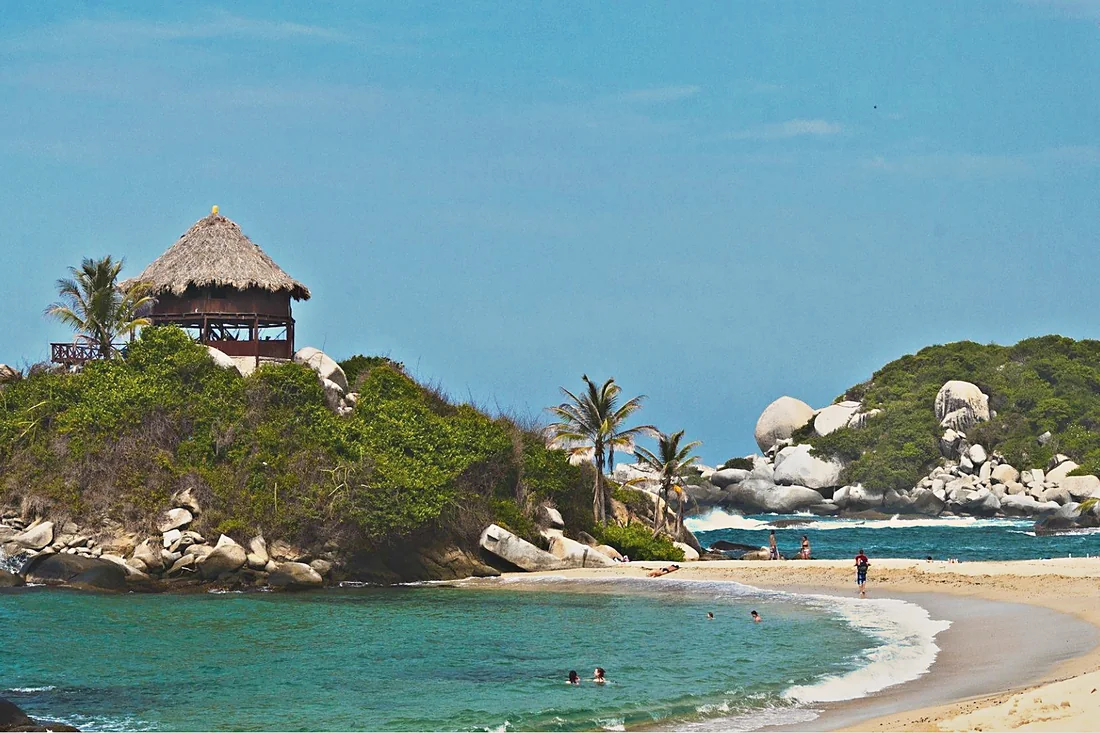
Clear water in Tayrona, the Rosario and San Bernardo islands. You travel by boat, and it pays to book ahead in high season.

Caribbean Region · Colombia
The northern coast: Cartagena, Santa Marta, Barranquilla, La Guajira and San Andrés. Warm sea, a walled city, a national park and a desert beside the water, all within five hours of road.
Licensed receptive operator, RNT 44180. Transfers and tours across the region.
What makes it different
Four things you will not find elsewhere in the country: reef water, a walled city, a desert beside the ocean and a festival calendar that sets the pace of the year.
Clear water in Tayrona, the Rosario and San Bernardo islands. You travel by boat, and it pays to book ahead in high season.
Cartagena is a World Heritage city: walls, vaults and San Felipe castle. Santa Marta was the first city founded on the continent.
La Guajira is unlike anything else in Colombia: dunes beside the sea, salt flats and Wayuu communities with their own language.
Barranquilla carnival, champeta, vallenato and seafood. This is the region where the party is part of the calendar.
Where to stay and move from
Five bases cover the region, from the mainland to the archipelago. Each has its own tour catalogue and its airport transfer page.
Getting in
Three main airports, plus the archipelago's own. Each has a page with a fixed airport-to-hotel price.
How it is covered
The region is covered by road and by water. Distances between cities are short; trips to the islands depend on the sea.
Cartagena, Santa Marta or Barranquilla. All three airports have a page with a fixed airport-to-hotel price.
Cartagena to Barranquilla is two hours; Cartagena to Santa Marta, four. It is done in a private vehicle, with stops if you want them.
Rosario and San Bernardo from Cartagena; Tayrona is walked. In La Guajira you travel by 4×4 because there are no paved roads.
Every city has its own catalogue: city, islands, diving, desert or nature. They are coordinated with the transfers and flights.
Climate
December to April is the dry season and the busiest. May and October are the rainy months, which in the Caribbean usually means short afternoon showers.
| Destination | Best season | What to bear in mind |
|---|---|---|
| Cartagena | December to April | Dry season and the busiest. May and October are the rainy months. |
| Santa Marta and Tayrona | December to April | The park closes a few days a year to let the ecosystems rest; check before booking. |
| La Guajira | December to April | Less wind and drier heat. From May to November there is more breeze, which Cabo de la Vela appreciates. |
| Barranquilla | January to March | Outside carnival the weather is dry. Carnival falls in February or March and moves every price. |
The northern coast, with eight departments. It holds Cartagena, Santa Marta, Barranquilla and La Guajira, and it is the region most first-time visitors choose.
December to April, the dry season. May and October bring the most rain; the heat is constant all year.
Five to seven days to see Cartagena, Santa Marta and Tayrona with time. Add La Guajira and you need two more.
Yes, it is the most common combination. A 90-minute flight links Bogotá or Medellín with Cartagena or Santa Marta, so both regions fit in one week.
By boat from Cartagena, forty to ninety minutes depending on the island. It is booked with the tour and the state of the sea matters.
The park closes a few days a year for the ecosystems to rest and during periods of the indigenous communities. We check it when quoting.
Yes, with a local operation. You travel by 4×4 with a driver and a guide from the area, and sleep in rancherías or at Cabo de la Vela. It is not a place to improvise on your own.
Fish and seafood, coconut rice, patacón and arepa de huevo. Cartagena also has a restaurant scene you will not find elsewhere in the region.
No. Journeys between cities are done with a private driver and the islands by boat. Renting a car in Cartagena adds more problems than it solves: parking inside the walls is difficult.
A Colombian receptive operator with RNT 44180. In the last twelve months 4,268 travellers booked 1,392 services from a catalogue of 351 experiences.
Transfers, tours and islands in one quote. A person answers, not a form.