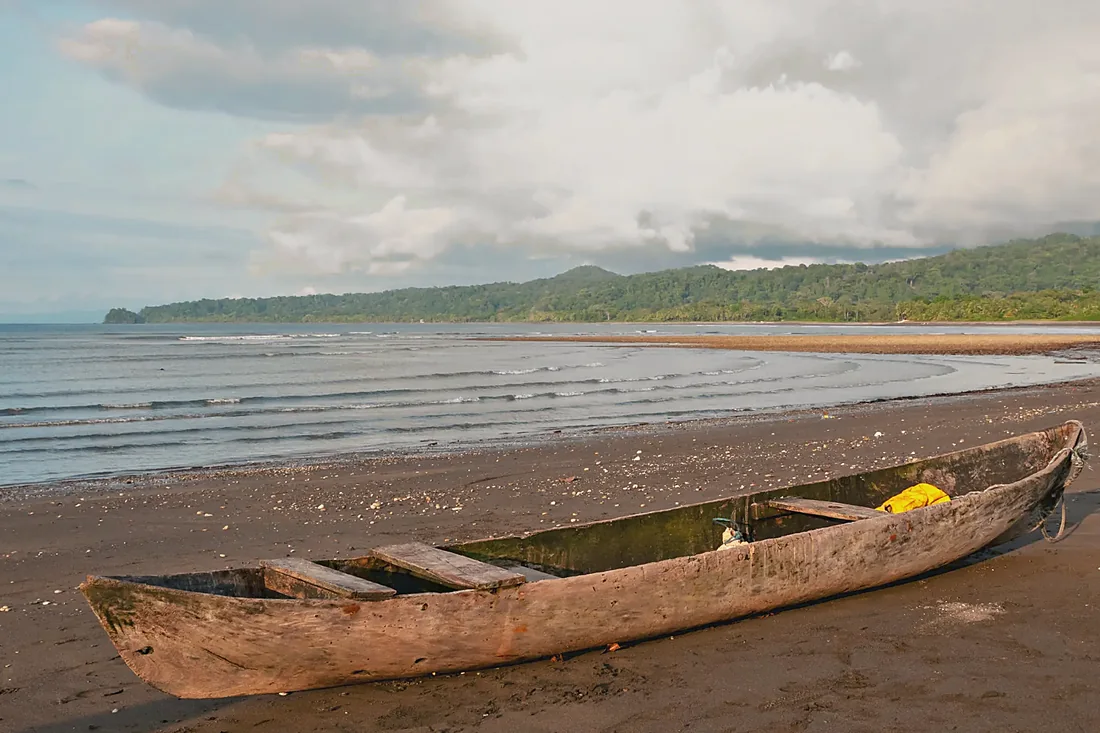
Whales
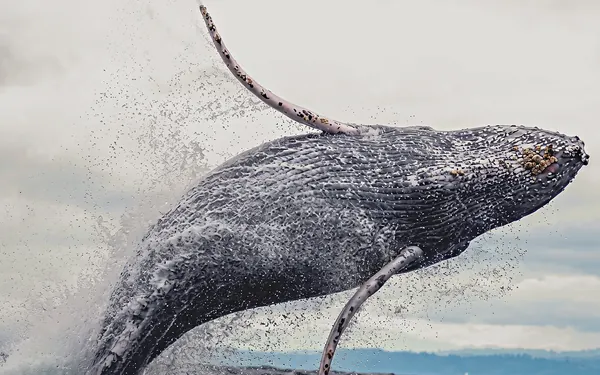
From July to October humpbacks come to calve in Bahía Málaga and Nuquí. It is the main reason to travel in that window.

Pacific Region · Colombia
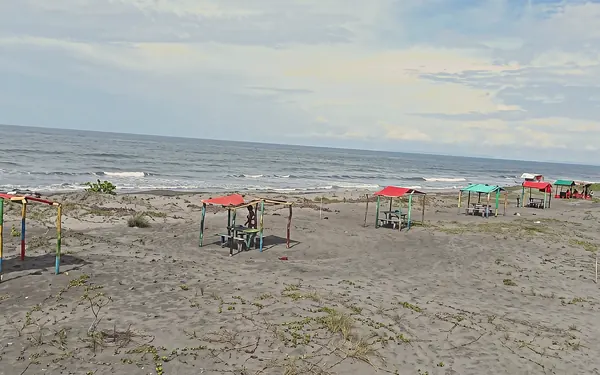
The western coast: Bahía Málaga, Nuquí, Cali and Tumaco. Humid rainforest reaching the sea, humpback whales between July and October and a cooking of coconut and fish. It is the least visited region in the country.
Licensed receptive operator, RNT 44180. Local guides across the region.
What makes it different
Four things you only find here, and all of them depend on the tide and the whale season.
From July to October humpbacks come to calve in Bahía Málaga and Nuquí. It is the main reason to travel in that window.
This is the only region where humid rainforest reaches the shoreline. You travel by estuary and mangrove, not by road.
Coconut, fish, plantain and shellfish. Pacific cooking is different from the Caribbean and it is eaten in the communities' own houses.
Marimba music, songs and patron saint festivals. Visits are made with a local guide and in agreement with the community.
Where to stay and move from
Four bases cover the region, across three departments. Each has its own way in, and it almost always includes a boat.
How it is covered
Here you plan by tides and boats, not by kilometres. Luggage is protected from the water and it pays to travel light.
Cali has the international airport; Buenaventura is three hours down the road.
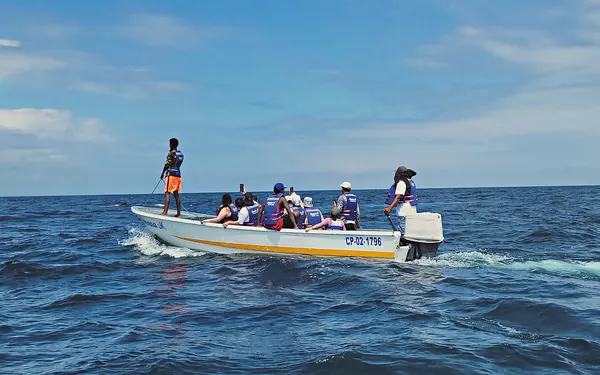
From Buenaventura, a boat of one to two hours depending on the beach. Luggage is protected from the water.
A flight from Medellín or Quibdó and then a boat. Seats are limited and booked well ahead.
Whale watching and community visits are arranged with them. It is not a place to arrive on your own.
Climate and season
It is the wettest region in the country: here nobody speaks of a dry season, only of whale season. July to October is when they arrive.
| Destination | Best season | What to bear in mind |
|---|---|---|
| Whales (Bahía Málaga and Nuquí) | July to October | Outside that window there are no whales: the rest of the year the region is visited for rainforest and culture. |
| Cali | Any month | Steady climate. December to March and July are the busiest event seasons. |
| Tumaco and the southern Pacific | June to September | Less rain. Check the security situation before booking. |
The reason most people come
Humpback whales travel from the Antarctic to calve in the Colombian Pacific. It is the largest wildlife event in the country and it only happens between July and October.
Humpbacks come to the Colombian Pacific to calve between July and October. The first groups appear in July and the last leave in early November; August and September are the peak.
Bahía Málaga, an hour and a half by boat from Buenaventura, and Nuquí, reached by small plane and then boat. Both are calving bays, so the whales are close to shore.
You leave early from the beach, spend two to three hours at sea and return for lunch. Boats are open and covered; the sea is calm in the bay but not always outside it.
Breaching, tails and mothers with calves are common in season. It is wildlife, not a show: there are days with many sightings and days with few.
The question everyone asks
Some areas of the Pacific have public order restrictions. We do not hide it and we do not sell trips into places we would not send our own family.
Every operation is checked with the local operator before we confirm a trip. If an area has a restriction that week, we say so and offer an alternative.
Not a guide from Bogotá: someone from the community, who knows the estuary, the tides and the families you visit. Access is agreed with them.
If the sea is too rough or the community has a ceremony, the plan changes. It is part of travelling in this region and we prefer to say it in advance.
A concrete example
Five days give two bases and one boat crossing each way. It is the route we repeat most because it does not turn the trip into a series of early starts.
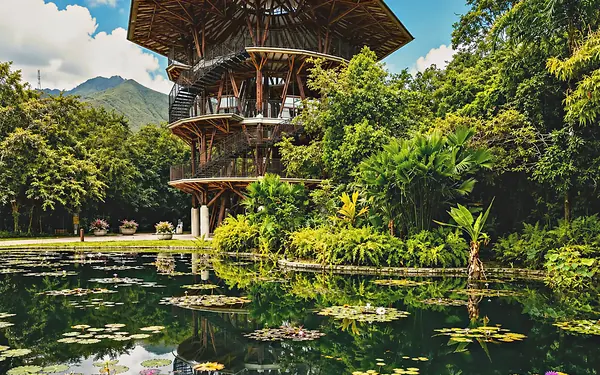
Arrival, the city and the Botanical Garden. Cali is the base for the region and the only place with a full range of hotels.
Road to Buenaventura and boat to the bay. Two nights in a community lodge, whale watching at dawn on both days.
Boat back, road to Cali and flight out. If the flight leaves late, a stop at the San Antonio church viewpoint.
With two more days, Nuquí by small plane. With one less, Bahía Málaga as a day trip from Cali, though it is a long day.
The western coast, across four departments: Chocó, Valle del Cauca, Cauca and Nariño. It is the wettest region in the country and the least visited.
Between July and October, when humpbacks come to calve in Bahía Málaga and Nuquí. Outside that season there is no whale watching.
By road from Cali to Buenaventura, about three hours, and then by boat for one to two hours depending on the beach.
You travel with a local operation and a community guide. Some areas of the Pacific have public order restrictions and these must be checked before booking; we verify it when quoting.
Three to five. Three covers Bahía Málaga and the whales; five adds Nuquí or Tumaco.
Yes. Cali is three hours by road from the Coffee Region, so both can be joined in a one-week trip.
Fish and shellfish with coconut, coconut rice, plantain and fruit drinks. Pacific cooking bears no resemblance to Caribbean food.
In Cali and Buenaventura, city hotels. On the beaches and in Nuquí, community lodges and eco-hotels with basic services.
Closer than in most countries, but with rules: engines off, no chasing, no swimming with them. The local boats are licensed for whale watching and the captain decides when to stop.
Quick-dry clothes, a rain jacket, sandals and a dry bag for the crossing. Sunscreen and insect repellent are essential, and there is no ATM in the villages: bring cash.
A Colombian receptive operator with RNT 44180. In the last twelve months 4,268 travellers booked 1,392 services.
Boat, local guide and lodging in one quote. A person answers, not a form.